
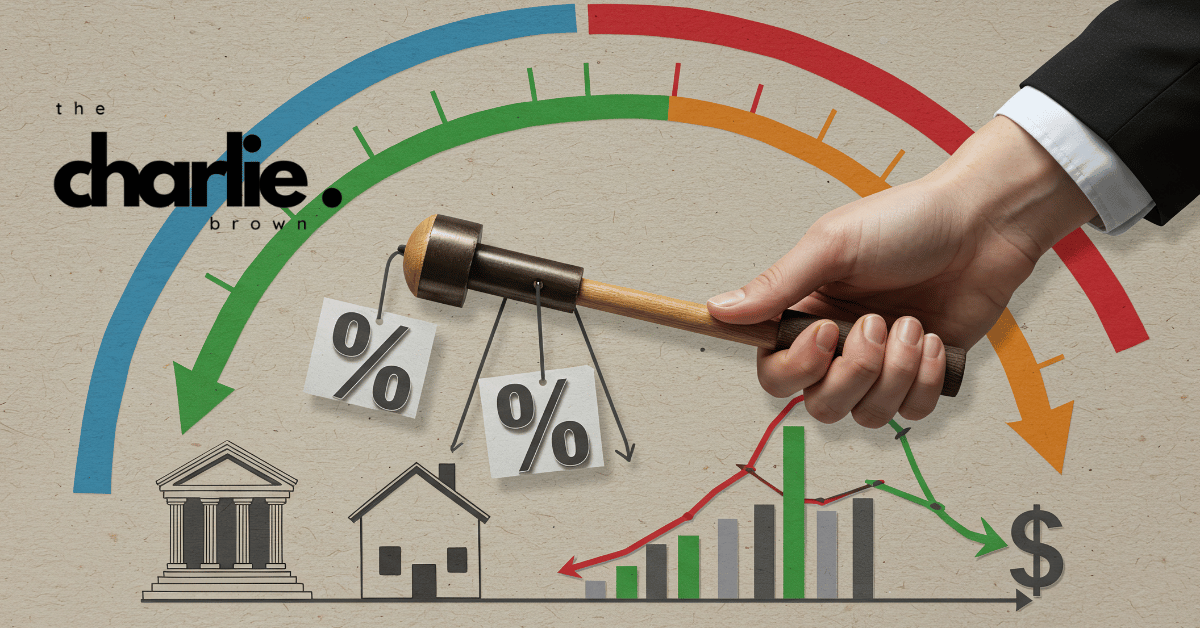
Imagine your economy is a car sputtering on the highway. It’s slowing down, the engine’s misfiring, and you’re watching the gas needle dip dangerously low. What’s a central bank to do?
Well, one of the most potent tools in its glovebox is cutting interest rates. It’s the economic equivalent of pouring premium fuel into a struggling engine and hoping for a turbo boost. But while rate cuts can give the economy a shot of espresso, they come with a sneaky side effect: inflation.
So let’s answer the big question — can interest rate cuts rescue a faltering economy, or are we just trading today’s troubles for tomorrow’s?
The Basics: What Happens When Interest Rates Are Cut?
First, a little primer — no need to dust off your Econ 101 textbook.
When a central bank (like the U.S. Federal Reserve or the European Central Bank) lowers interest rates, it’s essentially making borrowing cheaper. That means:
- People are more likely to take out loans for homes, cars, or big purchases.
- Businesses are more likely to invest in growth, expansion, and hiring.
- Consumers tend to spend more, since saving becomes less rewarding (goodbye, 5% CD rates).
Lower rates = more spending = more demand = faster economic growth. Sounds dreamy, right?
The Rescue Mission: Rate Cuts in Action
Let’s talk real-world scenarios. Think back to 2008, during the global financial crisis. Banks were failing, home prices were crashing, and consumers were panicking. What did central banks do? They slashed interest rates faster than you can say “quantitative easing.”
And guess what? It worked—eventually. Lower rates helped stabilize financial markets, encouraged lending, and nudged the economy back toward recovery (albeit slowly and painfully).
Again in 2020, as COVID-19 shut down the global economy, central banks responded with record-low rates. In the U.S., the Fed slashed rates to nearly zero. The result? A massive recovery in the stock market, soaring home prices, and a surprisingly fast rebound in jobs and GDP.
So yes, rate cuts can rescue a faltering economy. But—and it’s a big but—what happens when the medicine starts to make you dizzy?
The Flip Side: Inflation’s Not-So-Glamorous Entrance
Here’s the catch. When people spend more, businesses see rising demand. That’s good… until supply can’t keep up. What happens then?
Prices rise. That’s inflation in action.
And we’ve seen this story unfold in recent years. Following COVID-19 stimulus and rate cuts, demand roared back. Supply chains were still limping along. Combine the two and BAM—inflation soared to levels not seen in four decades.
We went from “should I buy this?” to “how much is this going to cost me today versus tomorrow?”
When inflation spikes:
- Consumers feel the pinch.
- Wages can’t always keep up.
- Savings lose value.
- The central bank has to reverse course and hike rates—which can then trigger a recession.
That’s the cruel irony: what saves you today might haunt you tomorrow.
So… Are Rate Cuts Worth the Risk?
Let’s weigh the pros and cons like it’s a high-stakes game of economic Jenga.
| Pros of Interest Rate Cuts | Cons of Interest Rate Cuts |
|---|---|
| Stimulate borrowing and investment | Risk overheating the economy |
| Boost consumer spending | Encourage risky financial behavior |
| Lower unemployment (eventually) | Devalue currency (hurting imports) |
| Increase stock market confidence | Fuel inflation |
| Stabilize financial markets | Lead to asset bubbles (housing, crypto) |
Like any powerful tool, it depends how and when it’s used. Cut too early or too deep, and you’re feeding a fire that might not have needed that much fuel. Cut too late, and the economy might already be in free fall.
Timing Is Everything
In the world of central banking, timing is the secret sauce. Economists don’t have a crystal ball (despite what their PowerPoints suggest), so they rely on data: inflation rates, GDP growth, job numbers, consumer confidence, and even weird indicators like cardboard box sales and Google search trends.
If inflation is already high, cutting rates can be like trying to put out a fire with gasoline. But if the economy is weak, and inflation is low or stable, it can be exactly what the doctor ordered.
So, ask yourself: Where are we now?
Today’s Context: What Are Central Banks Dealing With in 2025?
(Using real-time data for this part…)
Here’s a detailed, balanced, and up‑to‑date article on your topic — no half‑baked economic mumbo‑jumbo, just a clear explanation of what interest rate cuts really do when an economy is struggling… and what the inflation trade‑offs are.
Can Interest Rate Cuts Rescue a Faltering Economy — or Do They Risk Future Inflation?
When an economy starts sputtering like a lawn mower that really needed a tune‑up yesterday, policymakers reach for their toolkit. One of the most powerful and controversial tools in that kit is the interest rate — specifically, cutting it.
Cutting interest rates is like giving caffeine to a dozing economy: it can jump‑start spending and investment. But just like too much caffeine can lead to jitteriness, rate cuts can stir up inflation, potentially causing problems down the road. So let’s break this down in a way that makes sense whether you’re an econ nerd or just someone who pays bills.
📉 What Does an Interest Rate Cut Actually Do?
Simply put, when a central bank — like the U.S. Federal Reserve — cuts interest rates, it makes borrowing cheaper and saving less attractive. That affects the economy in several key ways:
- Loans become cheaper — consumers and businesses are more willing to borrow for homes, cars, expansions, etc. Investopedia
- Spending increases — lower interest on loans and credit encourages more purchasing. SmartAsset
- Business investment gets a boost — cheaper capital can spur hiring and expansion. Investopedia
- Savings yields fall — this can discourage hoarding cash and push money into circulation. boltonusa.com
This combination of cheaper credit and stronger spending is why central banks often reduce rates when economic growth is slowing.
But — and this is where it gets interesting — there’s a cost: when demand outpaces the economy’s ability to supply goods and services, inflation tends to rise. Bank of Canada
💉 Rate Cuts as Economic Rescue Medicine
When They Help
Rate cuts are most effective when:
✔ Consumers are hesitant to spend
✔ Businesses are reluctant to invest
✔ Job growth is slowing
✔ Inflation is already low or moderate
In these cases, lower rates can:
- Stimulate economic activity
- Boost consumer confidence
- Support a weaker labor market
For example, in 2025 the Federal Reserve cut its key interest rate multiple times to address signs of a slowing economy and weak job market. The benchmark federal funds rate was reduced to about 3.5–3.75%, the lowest in several years, as policymakers sought to support growth while inflation was still above target but not exploding. Financial Times+1
In the UK, weak growth and a contraction in GDP reinforced expectations that the Bank of England would also cut interest rates to stimulate activity. The Guardian
The logic here is classic Keynesian economics: boost demand when private spending is insufficient and avoid a deeper downturn.
🔥 The Inflation Trade‑Off
But here’s the rub: when demand rises faster than supply, prices tend to follow. That’s inflation.
How Interest Rates Affect Inflation
Lower interest rates increase borrowing and spending. More spending means more money chasing goods and services — and prices can go up. Bank of Canada
In normal times, central banks aim for a moderate, predictable inflation rate (around 2% in the U.S.) because it encourages spending without destabilizing prices. SmartAsset
However, if rates stay too low for too long, inflation can get out of hand — eating away at purchasing power and squeezing household budgets.
Seeing It in Today’s Numbers
Recent inflation metrics indicate that U.S. inflation remains slightly above target (with core measures near 2.9%). That’s one reason some policymakers dissented when recent rate cuts were decided — they worried that inflation was still too high to justify further easing. Reuters
This is precisely that policy dilemma: fight slowing growth or fight inflation? Central bankers have to balance both.
📊 The Real‑World Policy Balancing Act
Central Banks Want Two Things
Central banks don’t just care about one goal — they typically pursue a dual mandate:
- Stable prices (low inflation)
- Maximum sustainable employment Federal Reserve
These goals can conflict. Rate cuts can help jobs but risk inflation. Rate hikes can cool inflation but slow growth or increase unemployment.
That’s why even within the Federal Reserve, there are disagreements. Some policymakers recently voted against a rate cut, preferring to wait for more data before risking higher inflation. Reuters
📌 But Isn’t Inflation Already Controlled?
Great question! Inflation isn’t binary (on/off). It’s a spectrum. And right now:
- Inflation remains above the Fed’s 2% target
- Yet policymakers see slowing economic signals as a strong reason to cut rates
That’s why the Fed’s December 2025 cut was cautious and signaled that further cuts would depend on how inflation and jobs data evolve. Reuters
📈 So, What Happens Next?
Here’s the likely scenario:
If the Economy Keeps Slowing
- The Fed may cut rates again to support jobs and spending
- Cheaper borrowing could prolong economic recovery
- But policymakers will watch inflation closely
If Inflation Resurges
- Central banks might pause cuts or even raise rates again
- The goal would be to prevent inflation expectations from getting unanchored
This zig‑zag policy path is why people in markets and Main Street alike sometimes feel like the Fed is swimming in the dark — they have to make decisions based on incomplete data and lags in economic effects. Business Insider
💭 Bottom Line: Rescue or Risk?
Yes — interest rate cuts can help rescue a faltering economy.
Lower borrowing costs usually stimulate spending and investment, helping counteract slowing growth.
But — and it’s a big but — rate cuts can also fuel inflation if demand outstrips supply.
And inflation can undermine the very economic stability policymakers are trying to protect.
In short:
Interest rate cuts aren’t a magic bullet. They’re more like pain relievers — effective for symptoms, but they don’t fix the underlying problem and can have side effects if overused.
📦 From Interest Rates to Everyday Life: The Domino Effect
Interest rates may seem like some mysterious number only bankers care about, but trust me — when rates move, they send ripples through every corner of your financial life. Let’s break down what happens when rates drop and how it affects you.
🏡 Mortgage Rates: The First Domino to Fall
Let’s start with the big one. When the Fed cuts rates, mortgage rates usually follow — not immediately, but close enough to make a difference.
🤔 So What Happens?
- Lower mortgage rates = cheaper monthly payments
- Homebuyers can afford more house with the same income
- Homeowners might consider refinancing
📉 Real Example:
If you were approved for a 30-year fixed-rate mortgage at 7% on a $300,000 home, your monthly principal & interest is around $2,000.
But if rates drop to 6%, that payment falls to about $1,800 — that’s $200/month saved or $72,000 over 30 years!
⚠️ But Watch Out:
Lower rates can also push up home prices, since more people jump into the market. In recent years, rate cuts led to bidding wars and record price hikes in some cities. So your savings on interest might get eaten up by a higher sale price.
🚗 Auto Loans: More Zoom for Your Buck
Car financing gets cheaper too. Interest rate cuts typically bring:
- Lower monthly car payments
- More leasing and financing deals
- Increased car demand, especially for used vehicles
🛑 Caveat:
During supply crunches (like post-COVID), rate cuts helped demand surge, but there weren’t enough cars available — so prices spiked. It’s not just about credit, it’s also about supply.
🛒 Groceries, Rent & Bills: The Inflation Angle
Here’s where things get spicy — literally and financially.
While rate cuts can help job growth and stabilize the economy, they can also boost demand for goods, which pushes prices up if supply can’t keep up.
Example:
After the rate cuts and stimulus during COVID, consumers had more money, but supply chains were disrupted. That created the perfect storm:
- Chicken prices? Up.
- Eggs? Skyrocketed.
- Rent? Escalated in many cities.
- Gas? Don’t even ask.
So Yes, Rate Cuts Can Indirectly Raise Your Grocery Bill.
Even though the Fed isn’t directly setting prices at Trader Joe’s, the chain reaction from rate cuts can lead to more money chasing the same basket of groceries.
💼 Jobs & Wages: The Silver Lining
On the plus side, rate cuts are good news for:
- Hiring: Businesses borrow to expand and hire more people.
- Wages: More competition for workers = better pay.
- Small businesses: Cheaper loans mean more startups and expansion plans.
Think of it this way: if the economy were a party, rate cuts are like turning the music back on and ordering another round. More people want in, and those already there feel better about spending.
💳 Credit Cards: A Mixed Bag
You might be thinking: “Sweet, rate cuts mean my credit card interest goes down, right?”
Yes… but with strings attached.
Most credit cards are variable rate, so a Fed rate cut can lower your APR — but don’t expect miracles. A 0.25% cut might only trim your interest by a few bucks unless you’re carrying a large balance. And let’s be honest — if you’re revolving debt, that savings gets wiped out fast if you keep spending.
🏦 Savings Accounts & CDs: Oof, the Downside
Bad news for savers.
- High-yield savings accounts drop their rates
- CD rates fall
- You earn less interest on your emergency fund
In 2022–2023, savers were finally enjoying 4–5% on online savings accounts. But by late 2025, as the Fed began rate cuts, banks started dropping those returns. Now, some high-yield accounts are back around 3% or less, with more cuts expected. That’s a kick in the shins for retirees and anyone relying on passive income from interest.
📈 Investments: Stocks, Bonds, and the Casino Effect
📊 Stocks:
Rate cuts often lead to a stock market rally. Lower rates = cheaper borrowing = higher corporate profits = happier investors.
That’s why markets often spike just on the expectation of a rate cut.
But beware the “bad news is good news” phenomenon — if rate cuts come because the economy is in bad shape, stocks might still drop because of earnings fears.
🪙 Bonds:
- Existing bond prices rise when rates fall (inverse relationship).
- Great for bondholders, but not ideal if you’re buying new — yields on new bonds will be lower.
💸 Your Personal Finance Strategy: What Should You Do?
Here are some real-world takeaways based on interest rate cuts:
| If You’re… | Consider This |
|---|---|
| A Homebuyer | Lock in rates early — falling rates may trigger price increases |
| Carrying Credit Card Debt | Pay it down — even with cuts, interest adds up |
| A Saver | Shop around for high-yield accounts or consider I-Bonds |
| A Business Owner | Explore loans for expansion — capital just got cheaper |
| An Investor | Rebalance — rate cuts often favor growth stocks and tech |
🎯 Final Thoughts: It’s All About Balance
Interest rate cuts are not inherently good or bad. They’re tools. Whether they rescue or wreck the economy depends on:
- Timing
- Inflation
- Consumer behavior
- Global supply factors
Right now, in late 2025, central banks are walking a tightrope. They’re cutting rates to stimulate a cooling economy — but inflation is still a flickering flame in the background.
Will the cuts help us land softly, or are we in for a bumpy inflation rerun?
Only time (and maybe your grocery receipt) will tell.